The math behind ray tracing
In a previous raytracing project, we had to deal basically with two math operations:
- Drawing circles in the screen
- How to propagate traces throughout the screen
Let’s examine in detail how the circle drawing operation was done. The rays will be covered in a future post
Circles#
Consider the following code:
struct Circle {
  double x;
  double y;
  double r;
};
This sctucture covers the most essencial parameters we need to perform math operations with circles.
void FillCircle(SDL_Surface *surface, struct Circle circle, Uint32 color) {
  double radius_squared = pow(circle.r, 2);

  for (double x = circle.x - circle.r; x <= circle.x + circle.r; x++) {
    for (double y = circle.y - circle.r; y <= circle.y + circle.r; y++) {
      double distance_squared = pow(x - circle.x, 2) + pow(y - circle.y, 2);

      if (distance_squared < radius_squared) {
        SDL_Rect pixel = (SDL_Rect){x, y, 1, 1};
        SDL_FillRect(surface, &pixel, color);
      }
    }
  }
}
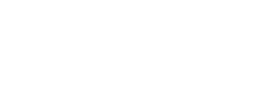
First of all, is important to know that the equation that describes a circle is:
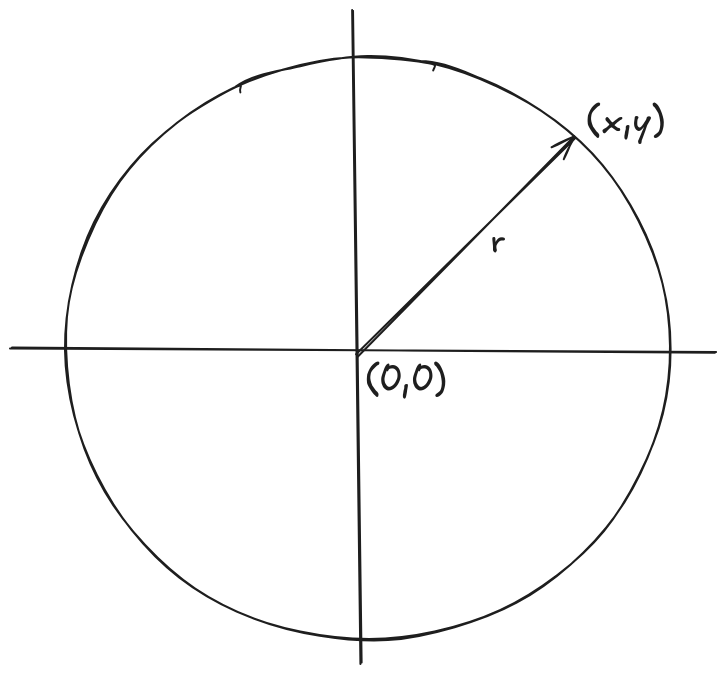
Now, let’s rewrite the cove above in a different way, more like a pseudocode
FillCircle(surface, circle, color) {
  // circle.r represents the circle radius
  // circle.x represents the center of the circle in the x axis
  // circle.y represents the center of the circle in the y axis

  // In the circle's equation, the calculus made on the coordinates x and y
  // must always be equals to the squared value of the radius of the circle.
  // Because of that we store the value of the radius squared (our reference)
  // here.
  radius_squared = pow(circle.r, 2);

  x_leftmost_point = circle.x - circle.r;
  x_rightmost_point = circle.x + circle.r;

  y_upmost_point = circle.y + circle.r;
  y_belowmost_point = circle.y - circle.r;

  // If we loop from the leftmost to the rightmost points of the circle
  // consequently we will cover all the circle's x axis
  for (current_x = x_leftmost_point; current_x <= x_rightmost_point;
       current_x++) {
    // In a similar way, we're covering all the circle's y axis here.
    for (current_y = y_belowmost_point; current_y <= y_upmost_point;
         current_y++) {
      // In the circle equation, distance_squared represents the left leg
      // of the equation
      distance_squared = pow(x - circle.x, 2) + pow(y - circle.y, 2);

      // Obeying the equation, if the distance_squared is less than
      // radius_squared we're inside the circle
      if (distance_squared < radius_squared) {
        // If we're inside the circle, we colorize the pixel
        SDL_Rect pixel = (SDL_Rect){x, y, 1, 1};
        SDL_FillRect(surface, &pixel, color);
      }
    }
  }
}
Read other posts